
What You Need to Know Before Playing High Roller Casino Games
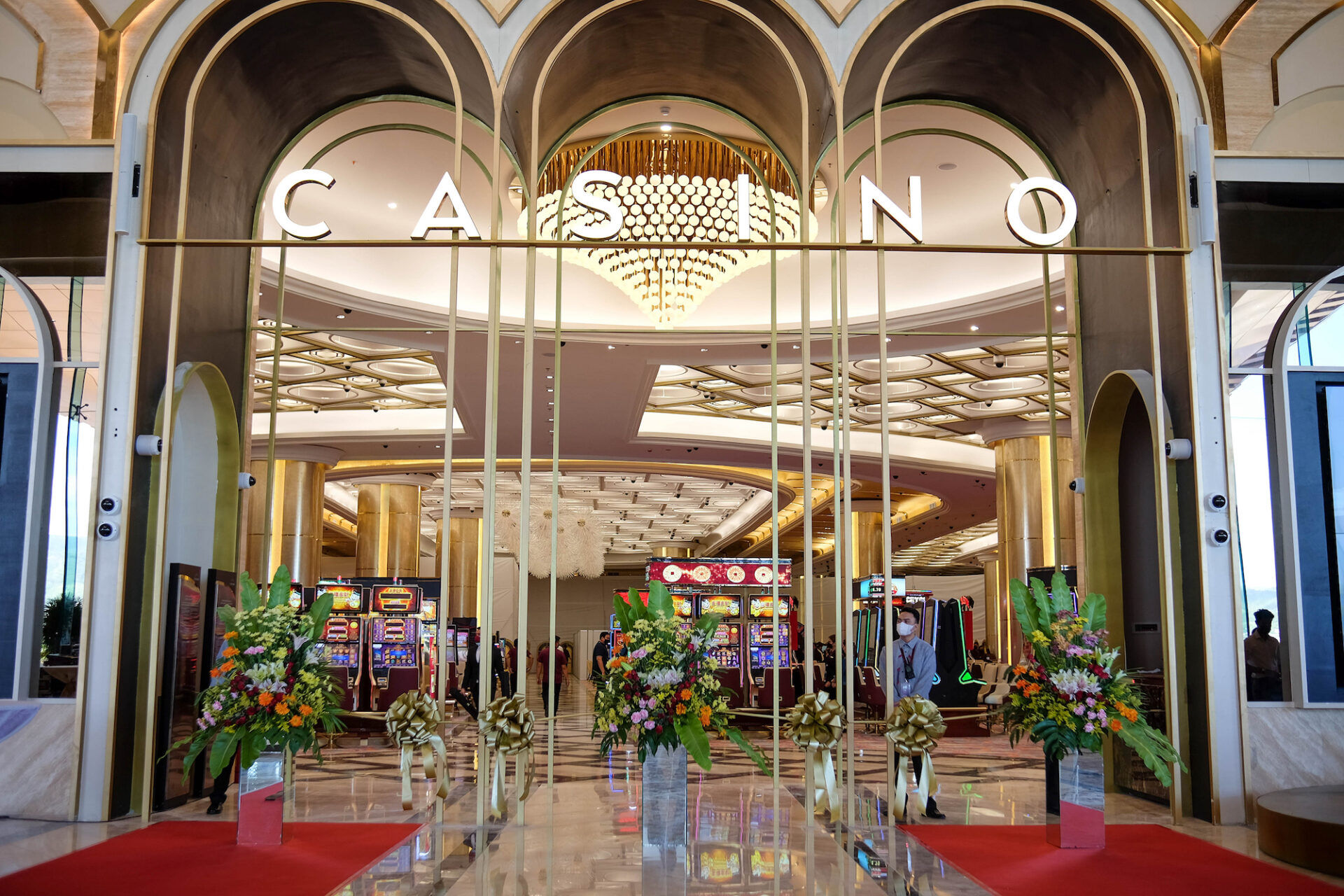
Venturing into high roller casino games changes more than your bet size https://wildwincasino.ca/. It shifts the entire rhythm of play, the level of service, and the financial mechanics behind every wager. Across Canada, more players are discovering premium tables and exclusive slots without fully understanding what separates a casual Saturday session from genuine high-stakes action. We have seen newcomers make costly assumptions about comps, withdrawal limits, and game volatility that could have been bypassed with ten minutes of preparation. This guide takes you through the realities that matter most, from bankroll architecture to the overlooked value of tailored VIP support, so you can decide whether the top-tier experience at a platform like Wildwin Casino aligns with your expectations before you place that first oversized bet.
Mobile High Roller Play: What Works and What Requires Careful Setup
High-stakes play on mobile devices has evolved far beyond the basic interfaces of a few years ago, but it still necessitates a more careful technical setup than desktop play. The primary issue for high roller mobile sessions is connection stability, not app design. Cellular data networks are susceptible to brief drops during handoffs between towers, and a two-second interruption when you are confirming a $300 live dealer roulette bet can leave the round unresolved. We advise playing high-limit live tables only on Wi-Fi with at least fifteen megabits per second of dedicated throughput, and enabling airplane mode with Wi-Fi active removes the risk of a cellular handoff hijacking your session. The app itself should maintain your login state across brief reconnections so that a momentary blip does not log you out mid-hand.
The screen real estate challenge is real. On a phone display, a fully featured high-limit live roulette table with racetrack betting, neighbour bets, and multiple chip denominations can feel crowded. Tablet play solves most of these ergonomic issues and has become the preferred mobile form factor for many serious players. Look for apps that offer a landscape-optimized layout specifically for live dealer games, with the bet placement grid scaled large enough to avoid finger-slip errors on adjacent numbers. Some casino apps designed for the Canadian market now include a customizable chip tray where you can pre-set your preferred denomination shortcut, lowering the chance of accidentally placing a $500 chip when you intended $50.
Battery and performance management also factor in unexpectedly. Extended high roller sessions on graphically intensive live streams can drain a fully charged phone in under two hours and trigger thermal throttling that impairs the stream quality. Setting screen brightness to seventy percent instead of maximum and closing background applications before launching the casino app measurably prolongs session life. The mobile experience for high-stakes play is now genuinely excellent when these conditions are managed, but it remains a tool you must configure, not one that works optimally out of the box.
Slot Volatility and Why It Matters at Higher Bet Levels
Volatility is an theoretical idea when you bet small amounts, but it becomes palpable when each wager costs large sums. In slot terminology, high-volatility games concentrate payouts into infrequent big wins, while low-variance games provide minor payouts frequently. A whale on a high-volatility slot can endure fifty consecutive dead spins, each worth $100, observing $5,000 disappear in just a few minutes with no bonus trigger. That is typical for the game algorithm, but it seems disastrous if you did not select the volatility profile deliberately. We suggest high-roller slot enthusiasts to research the game’s variance rating before playing it. Third-party review sites and the developer’s official documentation often classify volatility on a 1-to-5 scale or low, medium, or high, and that single data point should determine your money management more than the look or jackpot size.
Table game volatility follows separate rules but is similarly trackable. Caribbean Poker carries a theoretical edge around 5.2% with extreme variance because the progressive wager can send payout ratios into the thousands-to-1 territory while the main game grinds steadily downward. Contrast that with baccarat’s banker bet with a theoretical edge of about 1.06% and a volatility structure that maintains your bankroll oscillating within a small window for long stretches. The VIP baccarat tables draw players who value staying power and comp accumulation, while the Caribbean Stud players accepts a quicker loss pace in trade for transformative prize opportunities. Neither choice is wrong; the problem is being unaware of which path you are on when you sit down.
We advise monitoring your actual variance across a playing period by noting your biggest loss as a proportion of your session bankroll. If you commonly fall to 60%, that is a workable range. If you routinely touch 85% drawdowns before a recovery, either your variance acceptance is extremely high or your wager amounts is excessively large for the game you picked. Big betting is viable only when the funds is tailored to the math that actually governs the game you are playing, not the odds you hope applied to it.
The Psychological Rhythm of High-Limit Sessions
The mental demands of high roller play work differently from recreational play, and neglecting them comes at a greater cost than any tactical mistake. When a solitary hand equals what you typically allocate for a full evening, the emotional intensity condenses a month of fluctuations into a single hour. Gamblers who have smoothly dealt with $5 blackjack for a long time might find themselves making protective changes from fundamental strategy at $200 stakes, reducing double-down aggression or standing on soft totals that should be hit. The brain’s loss-aversion mechanisms are biologically calibrated to react to absolute amounts, not percentages, and forfeiting $1,000 appears worse than losing 10% of a $10,000 bankroll although the latter is the logical perspective.
Arranging sessions with firm stopping limits on both duration and losses preserves decision quality. A widely adopted protocol among veteran high-limit gamblers is the 60/25 guideline: end any session immediately if your session funds declines by 25%, regardless of how early it happens, and restrict continuous play at an hour before a required pause of at least twenty minutes. The 20-minute interval permits cortisol levels to calm and restores the analytical detachment that successful decision-making demands. Having a timer in view on your workstation or extra display keeps this boundary objective. Platforms that include in-session time and loss counters simplify the process to automate these protections without depending solely on willpower.
Another underestimated psychological aid is the post-game diary. For a few minutes after logging off, note the games played, the mean stake size, the maximum balance, the lowest balance, and your mental condition at the instant of your highest stake. Patterns surface fast. You may find that your highest stakes cluster immediately after a scarce bonus trigger, suggesting euphoria-driven sizing, or that you chase roulette losses with increased bet amounts in the closing ten minutes of a gaming session. Recognizing those patterns turns them from invisible triggers into handled elements, and high roller longevity depends on that conversion more than any individual strategy guide.
FAQ
What makes someone as a big spender at an online casino?
A high roller is usually defined by steady bet sizes and total wagering volume rather than a single deposit amount. At most Canadian-facing platforms, players who average $50 or more per hand on table games or $10 per spin on slots and accumulate tens of thousands in monthly wagering are considered high-limit players. The invitation to dedicated VIP tiers usually follows after a pattern of sustained volume over several weeks, not a one-time large deposit. The threshold varies by operator, but wagering frequency counts than a flashy first session.
Are high rollers given looser game rules or better odds?
Game odds are decided by the mathematical model and the provider’s configuration, not by your player status. However, high roller lobbies frequently include rule sets that have a lower house edge, such as single-zero roulette instead of double-zero, or blackjack tables with surrender and dealer-stands-on-soft-17. The platform provides these tables to draw in serious players who understand the edge differences. VIP status does not affect the underlying math, but it grants access to the tables where the math is already more advantageous.
How fast can large withdrawals be processed?
After identity verification is fully cleared, high roller withdrawals often receive priority handling that pushes internal processing to under twenty-four hours. The actual arrival time depends on the payout method. Interac transfers can land within hours, cryptocurrency payouts may complete in under an hour, and bank wires typically add one to three business days. The critical preparation step is submitting enhanced verification documents including proof of income or source of funds early, because compliance checks are the most common cause of payout delays at large sums.
Must high rollers claim the standard welcome bonus or arrange something custom?
In many cases negotiating directly with a VIP representative yields a better deal than the public welcome offer. Standard bonuses often come with wagering requirements that are impractical at high volumes. A player depositing $10,000 might face a playthrough obligation of several hundred thousand dollars before converting bonus funds. A custom arrangement might instead offer lower wagering multiples, a higher cap matched to your deposit size, or cashback on net losses with no lock-in. Always ask what alternatives exist before clicking the generic offer.
Which is the safest way to manage a high roller bankroll?
The safest approach relies on stringent segregation between gambling funds and personal finances. Create a dedicated e-wallet or a bank sub-account reserved solely for casino play, top it up beforehand, and never top it up mid-session from credit sources. Use the 300-unit rule as a minimum: if your base bet is $100, your playing bankroll should be no less than $30,000. Configure a 25% drawdown stop-loss which stops play automatically when triggered, and arrange mandatory breaks each hour to keep decision clarity.
Can mobile devices handle high-limit live dealer games dependably?
Certainly, modern casino apps manage high-limit live dealer games effectively, but connection quality is the decisive element. Opt for Wi-Fi providing a minimum of 15 Mbps and disable cellular data to stop tower-handoff interruptions. Pads offer a better betting interface versus smartphones for complicated roulette racetrack bets. Preselect your chosen chip denominations to minimize mis-taps, close background apps to lessen thermal throttling, and test the live stream on a small-stakes table before committing significant wagers to confirm your connection stays stable across a full shoe or wheel cycle.
Live Dealer VIP Rooms Versus RNG-Powered Tables
The divide between live dealer studios and RNG-powered table games widens significantly in the high-stakes bracket. Automated RNG tables offer practical advantages: they run instantly without waiting for seat availability, accept custom bet sizes down to the penny-equivalent if the platform allows, and allow you quicken the pace far beyond what a human dealer can sustain. A disciplined blackjack player can complete two hundred hands per hour on an RNG table set to turbo speed, compared to roughly sixty to eighty hands at a live table. That pace multiplier influences your hourly expected loss or gain, and high rollers who are accumulating comp points per hour often choose the efficiency of automated play.
Live dealer high roller rooms respond with transparency and service. Watching a physical shoe being shuffled and a tangible ball spinning in a roulette wheel eliminates any psychological friction about algorithm fairness, which is important when you are wagering thousands per round. The dedicated live studios catering to premium players offer features like Bet Behind for blackjack, which enables you wager on another player’s hand while waiting for an open seat, and multi-game view so you can view a baccarat table and a roulette wheel simultaneously. The dealers in these rooms are trained to maintain eye contact, manage complex payout calculations without delays, and identify when a regular player prefers quiet focus over small talk. The best live platforms also archive your session history with timestamped video, which can resolve disputes about misdealt hands or payout errors within hours instead of days.
A practical consideration that many Canadian players overlook is the streaming bandwidth requirement for high-quality live play. While the lounge area streams may default to 720p, many high-limit tables are now provided in 4K at sixty frames per second, demanding a stable connection of at least twenty-five megabits per second. If you are playing from a cottage or hotel with variable internet, test the stream quality on a low-stakes live table before making large wagers. A freeze during a critical decision on a $500 blackjack hand is entirely preventable with a quick bandwidth check beforehand.
Payment Methods and Withdrawal Timelines for Large Sums
Transferring money to and from a high roller account involves infrastructure that casual players rarely encounter. Standard deposit methods like Interac e-Transfer operate smoothly for initial funding up to several thousand dollars per transaction, but when you must deposit an account with twenty grand or more in a single day, the transaction limits and processing windows shift. Canadian banks often impose daily Interac send limits in the $3,000 to $10,000 range, which means a large bankroll might need to be staged across multiple transfers or changed to a direct wire. Bank wires typically settle within one to three business days, and some platforms waive the wire fee for deposits above a threshold amount that you should confirm with support before initiating.
Withdrawals offer a more intricate picture. The standard queue for a high roller cashout at a regulated platform often guarantees processing within twenty-four hours once identity verification is complete, but the actual time your funds hit your bank depends on the rail you choose. Interac withdrawals can appear within minutes to hours after approval, while wire transfers add one to three business days on top of internal processing. Cryptocurrency rails, where available, can shorten the entire timeline to under an hour, which is one reason some Canadian high rollers have expanded their payout preferences to include digital wallets. Examine the published withdrawal limits carefully. A platform might advertise „no limits for VIP players,“ but that usually means there is no arbitrary cap imposed by the casino, while the payment processor or banking partner still applies its own ceilings.
Identity verification is the hidden chokepoint that frustrates unprepared high rollers. At elevated withdrawal amounts, the compliance team will require source-of-funds documentation beyond standard KYC identity checks. Submitting a recent bank statement, payslip, or investment account screenshot before your first large withdrawal request eliminates delays that can stretch across a full week. We advise completing enhanced verification proactively, ideally during your first week of play, so that when a significant win occurs the payout process is already pre-cleared.
The Comp and Rewards Ecosystem Past the Welcome Offer
Welcome bonuses dominate the advertising landscape, but high roller value primarily lives in the ongoing comp economy that kicks in after the initial deposit match is cleared or declined. The standard public welcome package often features wagering requirements that make sense for moderate bankrolls but become an administrative burden at high volumes. A one-hundred percent match up to $2,000 with a thirty-five-times playthrough means you need to wager $70,000 before the bonus funds change to withdrawable cash. Some high rollers decide to pass on the welcome match entirely and negotiate directly with a VIP representative for a structure that matches their play pattern: lower wagering multiples, a higher cap, or cashback substituted for bonus credit.
The ongoing comp model at a platform like Wildwin Casino typically calculates your value based on theoretical loss, which is your total wagering volume multiplied by the house edge of the games you play. A player who wagers $100,000 in one month on blackjack with a 0.5% house edge generates a theoretical loss of $500, and the comp allocation might return 10% to 30% of that figure in forms such as cashback, free chips, tournament entries, physical gifts, or event invitations. Slot-heavy players generate higher theoretical loss figures due to the larger average house edge and receive proportionally larger comp streams, which explains why slots players often climb VIP tiers faster than table game specialists.
The perks worth pursuing evolve as your play level rises. At entry-level high roller tiers, useful perks like faster withdrawals and occasional deposit bonuses take precedence. At the higher tiers, intangible experiences such as vacation offers to sporting events, VIP treatment at major poker tournaments, and tailored birthday or anniversary gifts become the differentiators. We recommend asking your account manager for a comp value statement at the end of each quarter. It turns unclear benefits into a concrete number you can compare against your true losses, providing you with a accurate picture of the true cost of your play net of all rewards received.
- Comp value is typically calculated as a percentage of expected loss, not true loss.
- Table game players accumulate comps more gradually than slot machine players due to lower house edges.
- Quarterly comp statements help you assess the true value on your wagering volume.
- Securing a custom reward structure before taking any standard bonus can save a significant amount in wagering requirements.
- Tangible rewards and event entry often hold more personal value than cash equivalents at top-tier levels.
How High Roller Tables Are Different From Standard Games
High roller tables are not identical games with bigger betting squares. The rule variations, side bet availability, and even the deck penetration in blackjack can shift dramatically once you go beyond the velvet rope. At many Canadian-facing platforms, a standard blackjack table might use six decks and reshuffle at 50% penetration, while the high-limit version might use four decks with dealer stands on soft seventeen and reshuffle at 75%. Those changes tighten the house edge in ways that reward players who study the fine print. The minimum bet thresholds also create a different player pool. When you sit at a table requiring $100 per hand instead of $5, you are sharing the felt with fewer casual tourists and more disciplined regulars who monitor every deviation from basic strategy.
The physical or digital environment shifts accordingly. Online high roller lobbies often offer dedicated server infrastructure to eliminate latency during split-second decisions on multi-hand video poker or live dealer baccarat. The streaming quality on live tables typically increases to 4K with multi-camera angles, and the dealer interaction becomes more personalized. Some studios assign senior dealers to high-limit rooms specifically because they can handle the pace and the personality types that frequent those tables. The game selection shrinks too. You will find fewer novelty variants and more pure, high-stakes versions of baccarat, European roulette, and classic blackjack because serious players require mathematical clarity over themed distractions.
One concrete example that surprises players off guard is the surrender rule in high-limit blackjack. Late surrender is often available at premium tables but missing from lower-stakes versions. That single rule adjustment allows you recover half your stake when facing a dealer ace with a hard 16, and over thousands of hands the savings build up meaningfully. The takeaway is simple: before you join a high roller table, pull up the full rule sheet. Match it against the standard game you already know. The difference is rarely cosmetic; it lies in the percentage points that divide long-term winners from the rest.
Bankroll Requirements That Really Work
The most dangerous mistake in high roller play is having a bankroll that looks generous for standard stakes but vanishes in minutes when the chips are ten or twenty times larger. A practical high-limit bankroll is not about how much you are prepared to lose in one night. It is a numerical equation of your average bet, the game’s variance, and the session length you want to sustain. We recommend applying the 300-unit rule as a starting floor. If your minimum bet at a high-stakes roulette table is $50 per spin, your dedicated bankroll for that session alone should be at least $15,000. That is not luxury padding; it is the cushion needed to absorb a normal downswing without busting out early.
For slot players chasing high roller progressive jackpots, the math changes because volatility spikes sharply. A single spin on a premium slot might cost $20 to $200, and the return-to-player percentage often drops slightly on the highest denomination because the progressive contribution eats into the base game’s payout frequency. Doubling the unit count to 500 spins modifies the survival equation. If you plan to spin at $100 per pull, a $50,000 bankroll gives you roughly 500 attempts, which is only enough to see the theoretical hit frequency of many bonus features but nowhere near guaranteed jackpot territory. The real number that keeps you in the game long enough to enjoy the premium comps and tailored service is typically larger than most first-timers estimate by a factor of three.
Separating your bankroll from your daily finances also becomes non-negotiable at this level. Use a dedicated account or e-wallet exclusively for high-limit play, and never fund it from credit sources that charge interest or early repayment penalties. Canadian players have access to Interac and bank transfer rails that make segregated funding straightforward, and the discipline of moving money into a sealed-off balance before you log in protects your long-term financial health. The players who thrive in high roller circles treat their bankroll like a business inventory, not an emotional extension of their monthly budget.
High Roller VIP Tiers and What They Truly Provide
Elite casino experiences are structured around VIP programs, but the difference between promotional wording and what actually reaches your account can be considerable. The most valuable VIP tiers are seldom promoted in full on the main promotions page. They function on invitation or request, with qualifying limits determined by aggregate wager amount over a rolling thirty-day or quarterly period. At a Canada-friendly site like Wildwin Casino, the usual multi-tier structure might begin with a foundational loyalty tier accessible to all and then progress through several elite ranks, each providing speedier cashouts, higher table limits, and personal account management. What counts is not the rank title but the exact advantages that are attached to it.
The most overlooked VIP benefit is the individual account manager. A capable manager can accelerate withdrawals that would normally sit in a withdrawal queue for 48 hours, set up custom bonuses with reasonable playthrough conditions instead of the inflated terms attached to public offers, and notify you of time-sensitive high-stakes tournaments before they show up on the general calendar. We have observed VIP managers individually change cashback percentages retroactively when a platform-wide promotion was poorly communicated. That type of human override is impossible at basic membership levels. The next advantage worth analyzing is cashback. Elite cashback levels usually fall between 5% and 20% of overall losses over a defined cycle, and the payout frequency can differ from day-to-day to month-to-month. A monthly settlement appears small until you understand it means delaying for 30 days for a rebate that could finance your next session right away.
Loss compensation frameworks are another quiet pillar of VIP economics. Some programs calculate cashback to gross losses, others to net losses after winnings are subtracted, and that distinction can reduce by 50% the effective value. We recommend asking your account manager personally: „Is cashback determined on total stakes or on our final standing?“ The answer indicates more about the program’s integrity than any glossy level emblem. Also check whether VIP status decays. Many programs require maintaining a lowest monthly wager total, and a single quiet month can push you down two tiers, resetting benefits that needed six months to build up.
House Edge Transparency and Where to Discover the True Data
High roller players tend to scrutinize house edge percentages more rigorously than casual gamblers, yet the published numbers are not always where new players look to find them. The return-to-player percentage for slots is often presented in the game’s information or paytable menu, but the figure usually represents the theoretical RTP over millions of spins, not a short-session expectation. For table games, the house edge is rarely shown on the digital felt. You need to reconstruct it from the specific rule set. In European roulette, the single zero gives a house edge of 2.70% on all bets except the basket, while American roulette with its double zero bumps the edge to 5.26%, nearly doubling your expected cost per spin. A high roller playing $200 spins at an American wheel loses roughly $10.52 per spin in expected value compared to $5.40 at a European wheel, a difference that builds into thousands over a weekend.
We encourage looking at the game provider’s certification documentation. Reputable studios like Evolution, Pragmatic Play Live, and Playtech release their game rules and theoretical return tables on their official websites, and third-party testing labs such as eCOGRA and iTech Labs publish verification reports. These documents are occasionally dense, but the key figures are usually summarized in clear language. The return-to-player number alone is insufficient; you also want the hit frequency, which tells you how often a bet will pay anything at all. A slot with 96% RTP and 15% hit frequency behaves very differently from a slot with 96% RTP and 30% hit frequency, and the first one will exhaust a fixed bankroll much faster.
For Canadian players worried about fairness at platforms licensed offshore or in Kahnawake, the licensing body usually holds a public register of certified games. Cross-checking the games offered against that register takes minutes and confirms that the math models are independently verified. The platforms that genuinely prioritize high roller trust make these reports available from the footer links or the responsible gaming section, not buried behind a support ticket.